
PIK3CA
PIK3CA - An Introduction
PIK3CA normally plays a key role in controlling cell growth. When mutated, this gene leaves the growth signal permanently switched on, helping cancer cells survive, spread, and resist treatment. However, its presence in salivary gland cancers varies widely by subtype. It is most common in salivary duct carcinoma and mucoepidermoid carcinoma, where it often occurs with other cancer-causing genes.
Since these mutations continuously trigger cancer growth, drugs that block this signal (PI3Kα inhibitors) offer a promising targeted treatment for advanced or recurring cases. While individual patients with salivary duct carcinoma have responded well to these targeted therapies in case studies, using them routinely remains experimental and is still under active investigation.
What is PIK3CA?
The PIK3CA gene (Phosphatidylinositol-4,5-Bisphosphate 3-Kinase Catalytic Subunit Alpha) encodes the p110α catalytic subunit of class IA phosphoinositide 3-kinases (PI3Ks) [1]. When growth factors or hormones bind to cell surface receptors, PI3K activates the downstream PI3K/AKT/mTOR signalling pathway. This pathway functions as a master control switch for critical cellular processes, including growth, division, and proliferation; cell survival and apoptosis suppression; nutrient sensing and protein synthesis; cellular metabolism; and angiogenesis [1, 2].
Somatic mutations that occur in PIK3CA cause the p110α protein to become hyperactive. Hyperactivity of the PI3K pathway is notorious for driving treatment resistance and disease progression in cancer [3].
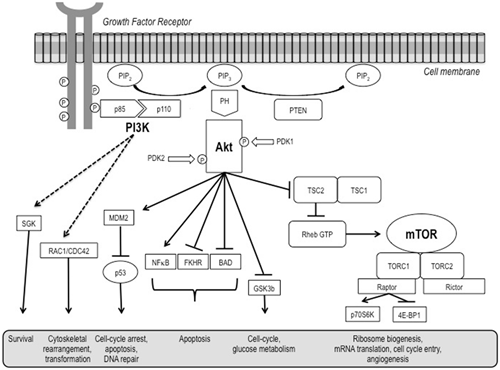
Figure 1. A schematic representation of the PI3K/Akt/mTOR pathway.
Note. From “Targeting PI3K/Akt/mTOR Signaling in Cancer” by C. Porta, C. Paglino and A. Mosca, 2014, Frontiers in Oncology. 4:64. (https://doi: 10.3389/fonc.2014.00064) [4].
What is the prevalence in salivary gland cancers?
PIK3CA is among the most frequently mutated oncogenes in human cancer [2]. However, its prevalence in salivary gland cancers (SGCs) varies considerably by histological subtype:
- Mucoepidermoid carcinoma (MEC): PIK3CA mutations occur in ~17%–21% of cases [5, 6]. In MEC, these alterations strongly correlate with concurrent mutations in TP53 (tumour suppressor) [5] as well as deletions or mutations in CDKN2A/B (cell cycle regulators) [7].
- Salivary duct carcinoma (SDC): SDC exhibits the highest rate of PIK3CA alterations among salivary malignancies, at ~20%–33% [7-9]. These mutations frequently co-occur with androgen receptor (AR) positivity and HRAS mutations [10]. A study of tissue samples from 66 patients demonstrated that when HRAS mutations are present in SDC, a PIK3CA mutation is found in up to 93% of cases [7].
- Adenoid cystic carcinoma (ACC) and acinic cell carcinoma (AcCC): PIK3CA mutations are rare (< 5%) [11]. They are particularly uncommon in fusion driven SGCs like ACC, which are predominantly driven by MYB-NFIB gene fusions [6, 11].
What is the clinical relevance?
Oncogenic PIK3CA mutations continuously activate PI3K/AKT/mTOR signalling, providing a strong rationale for targeted PI3Kα inhibitors in recurrent or metastatic settings, particularly for high-grade carcinomas and advanced SDC [2, 10]. Although individual patients with PIK3CA-mutated SDC have shown responses to off-label alpelisib in case studies, the routine use of PI3K inhibitors in SGC remains investigational [10, 12].
In other solid tumours, PI3Kα-selective agents have achieved regulatory success:
- Alpelisib became the first approved PI3Kα inhibitor, earning FDA approval in 2019 for HR+/HER2-, PIK3CA-mutated advanced or metastatic breast cancer in combination with fulvestrant [13].
- Inavolisib represents a newer generation of PI3Kα inhibitors that both blocks enzymatic activity and promotes the degradation of mutant p110α. It received FDA approval in 2024 for endocrine-resistant, HR+/HER2-, PIK3CA-mutated advanced or metastatic breast cancer in combination with palbociclib and fulvestrant [14].
Summary
Investigating PI3Kα inhibitors in SGCs is strongly justified by the high prevalence of activating PIK3CA mutations in aggressive subtypes like SDC (~20%–33%) and MEC (~17%–21%), where constitutive activation of the downstream PI3K/AKT/mTOR axis acts as a primary oncogenic driver of proliferation and survival. Furthermore, the frequent co-occurrence of PIK3CA alterations with HRAS mutations (up to 93% in SDC), AR+, and HER2 amplification provides a compelling rationale for combination strategies designed to overcome treatment resistance. Success in other PIK3CA-mutated tumours and early case reports in advanced SDC show potential for PI3Kα inhibitors.
Useful resources
Read more about how to get your tumour profiled and add to a research biobank here:
- Gene profiling or tumour profiling or genomic testing - Salivary Gland Cancer UK
- Donate tissue to the Biobank - Salivary Gland Cancer UK
References
- Samuels Y, Waldman T. Oncogenic mutations of PIK3CA in human cancers. Curr Top Microbiol Immunol. 2010; 347:21-41.
- Ottaiano A, Picone C, Santorsola M, Berretta M, Cutolo C, Belli A, et al. PIK3CA in Cancer: Structure, Biology, Alterations, and Actionability. Cancers [Internet]. 2026; 18(17):[2798 p.].
- Glaviano A, Foo ASC, Lam HY, Yap KCH, Jacot W, Jones RH, et al. PI3K/AKT/mTOR signaling transduction pathway and targeted therapies in cancer. Mol Cancer. 2023; 22(1):138.
- Porta C, Paglino C, Mosca A. Targeting PI3K/Akt/mTOR Signaling in Cancer. Frontiers in Oncology. 2014; Volume 4 - 2014.
- Wang K, McDermott JD, Schrock AB, Elvin JA, Gay L, Karam SD, et al. Comprehensive genomic profiling of salivary mucoepidermoid carcinomas reveals frequent BAP1, PIK3CA, and other actionable genomic alterations. Ann Oncol. 2017; 28(4):748-53.
- Pikul J, Rzepakowska A. Molecular landscape of salivary gland malignancies. What is already known? Contemp Oncol (Pozn). 2024; 28(3):201-16.
- Mueller SA, Gauthier MA, Blackburn J, Grady JP, Kraitsek S, Hajdu E, et al. Molecular patterns in salivary duct carcinoma identify prognostic subgroups. Mod Pathol. 2020; 33(10):1896-909.
- Alqahtani A, Ayesh HSK, Halawani H. PIK3CA Gene Mutations in Solid Malignancies: Association with Clinicopathological Parameters and Prognosis. Cancers [Internet]. 2020; 12(1):[93 p.].
- Kamali-Sarvestani M, Yip S, Bhang E, Usman F, Alex D, Ng T, et al. Molecular characterization of salivary cancers: Patterns of genomic alterations and potential for impact on therapeutic choices. Cancer Treatment and Research Communications. 2026; 49:101407.
- Rieke DT, Schröder S, Schafhausen P, Blanc E, Zuljan E, von der Emde B, et al. Targeted treatment in a case series of AR+, HRAS/PIK3CA co-mutated salivary duct carcinoma. Frontiers in Oncology. 2023; Volume 13 - 2023.
- Ross JS, Gay LM, Wang K, Vergilio JA, Suh J, Ramkissoon S, et al. Comprehensive genomic profiles of metastatic and relapsed salivary gland carcinomas are associated with tumor type and reveal new routes to targeted therapies. Ann Oncol. 2017; 28(10):2539-46.
- Sheth H, Kumar P, Shreenivas A, Sambath J, Pragya R, Madre C, et al. Excellent Response With Alpelisib and Bicalutamide for Advanced Salivary Duct Carcinoma With PIK3CA Mutation and High Androgen Receptor Expression-A Case Report. JCO Precis Oncol. 2021; 5.
- André F, Ciruelos E, Rubovszky G, Campone M, Loibl S, Rugo HS, et al. Alpelisib for PIK3CA-Mutated, Hormone Receptor-Positive Advanced Breast Cancer. N Engl J Med. 2019; 380(20):1929-40.
- Turner NC, Im SA, Saura C, Juric D, Loibl S, Kalinsky K, et al. Inavolisib-Based Therapy in PIK3CA-Mutated Advanced Breast Cancer. N Engl J Med. 2024; 391(17):1584-96.
Last Updated October 2026